Your Reviews
Select the Destination Country:
Gift Packages

Some gifts are quickly forgotten, while others leave a lasting impression. ParmaShop's gourmet Gift Packages were created with a specific idea in mind: to transform every gift into an experience, every gesture into a story made of Italian flavors, aromas, and traditions. If you are tired of giving impersonal gifts, if you are looking for something that speaks of authenticity, craftsmanship, and territory, our proposals are designed to truly surprise.
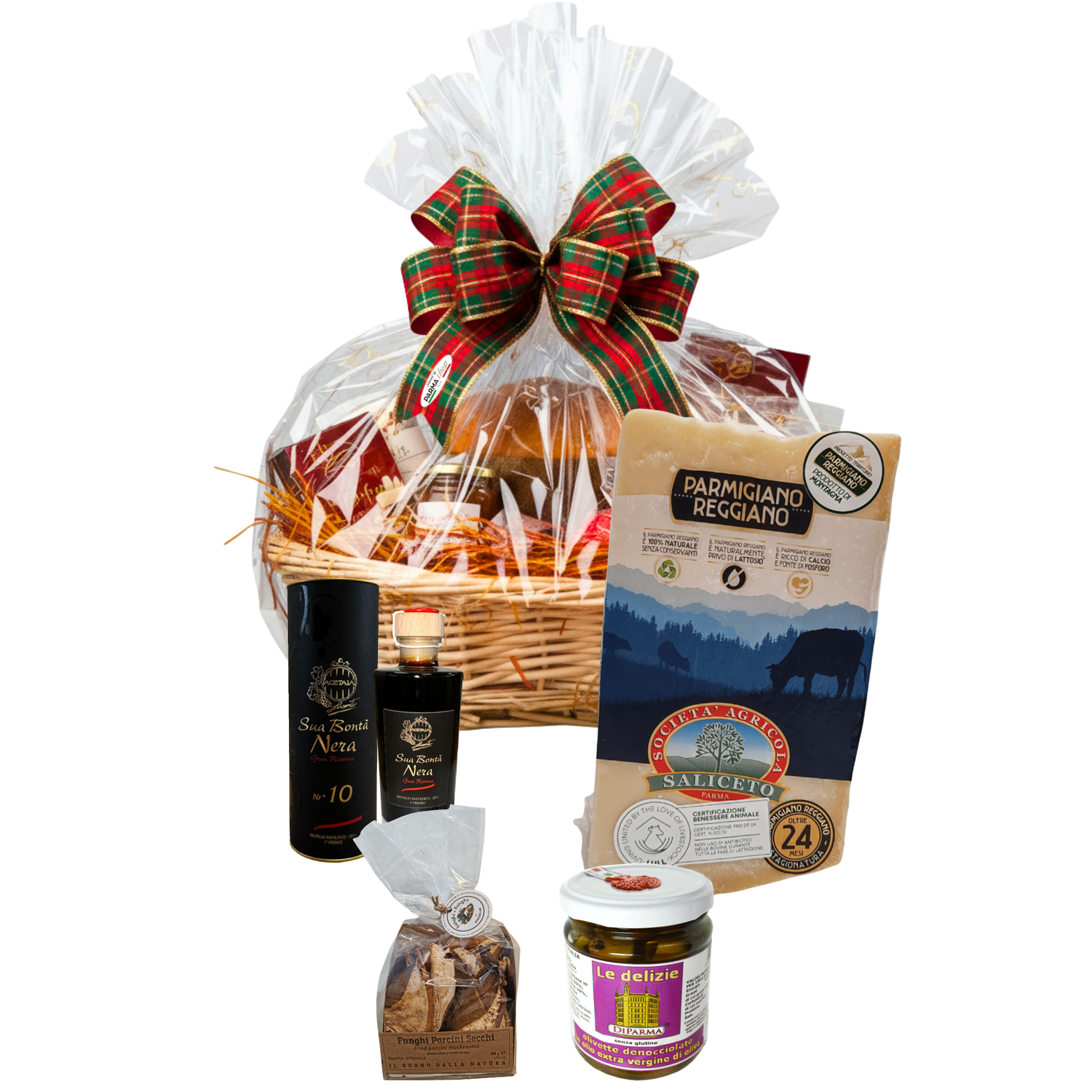
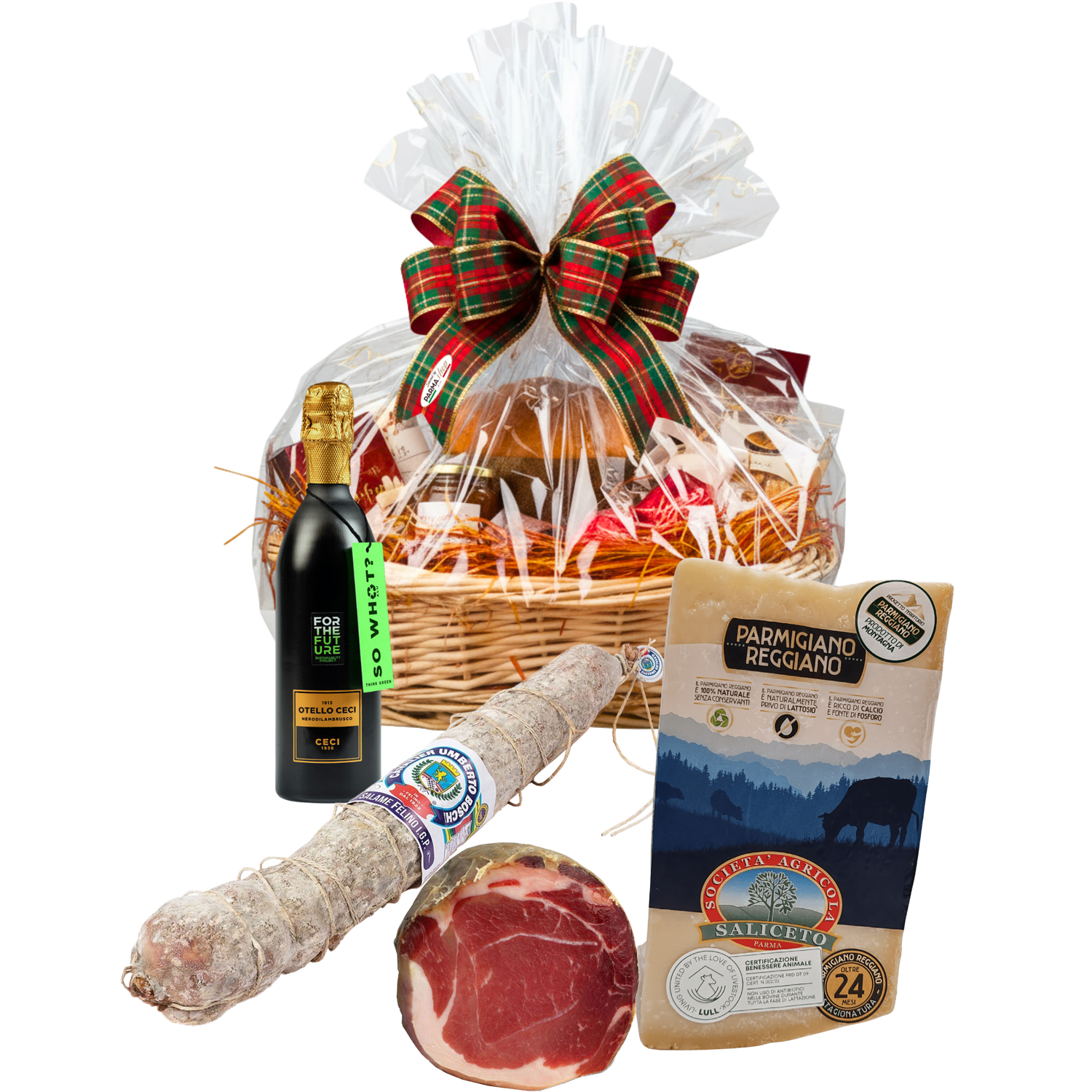
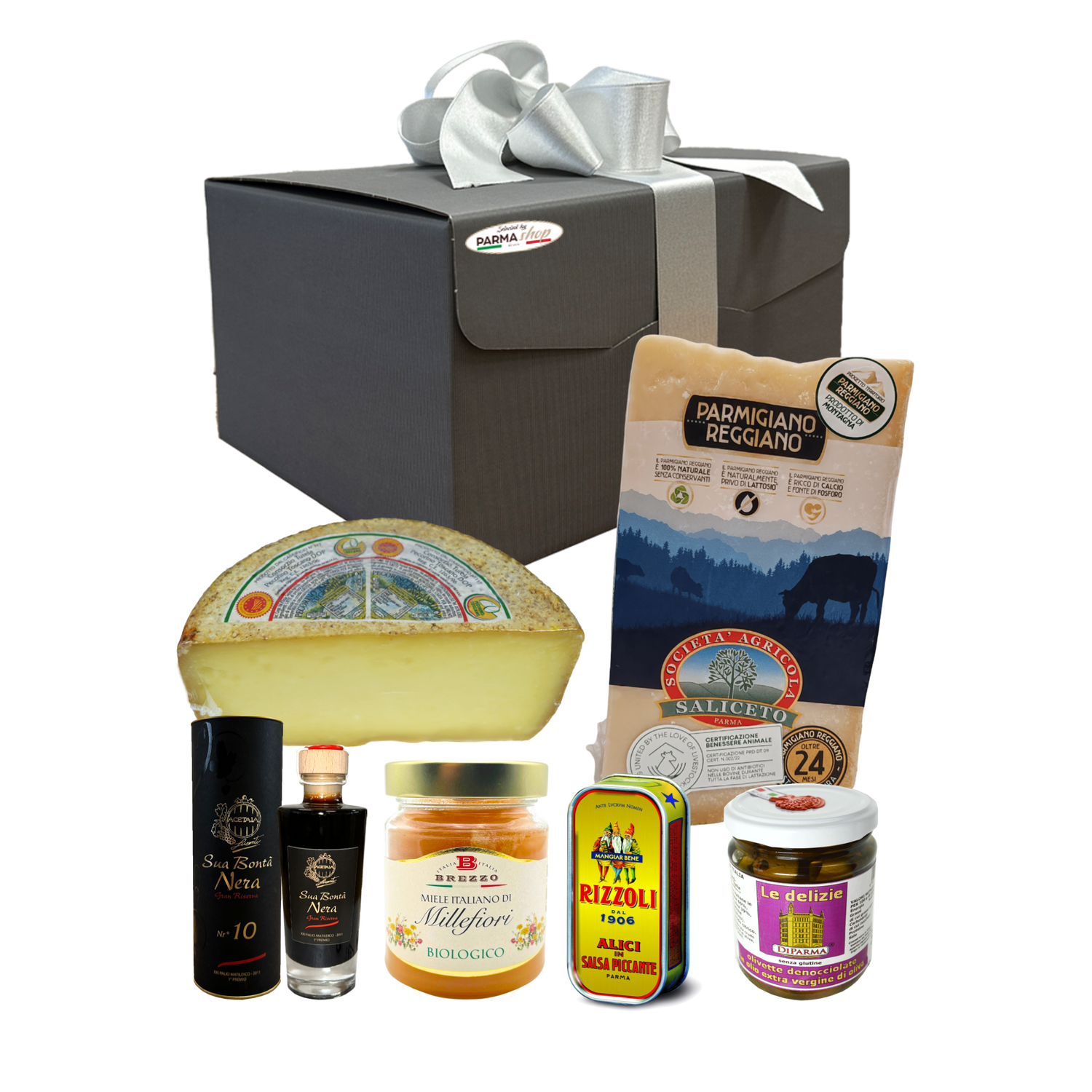
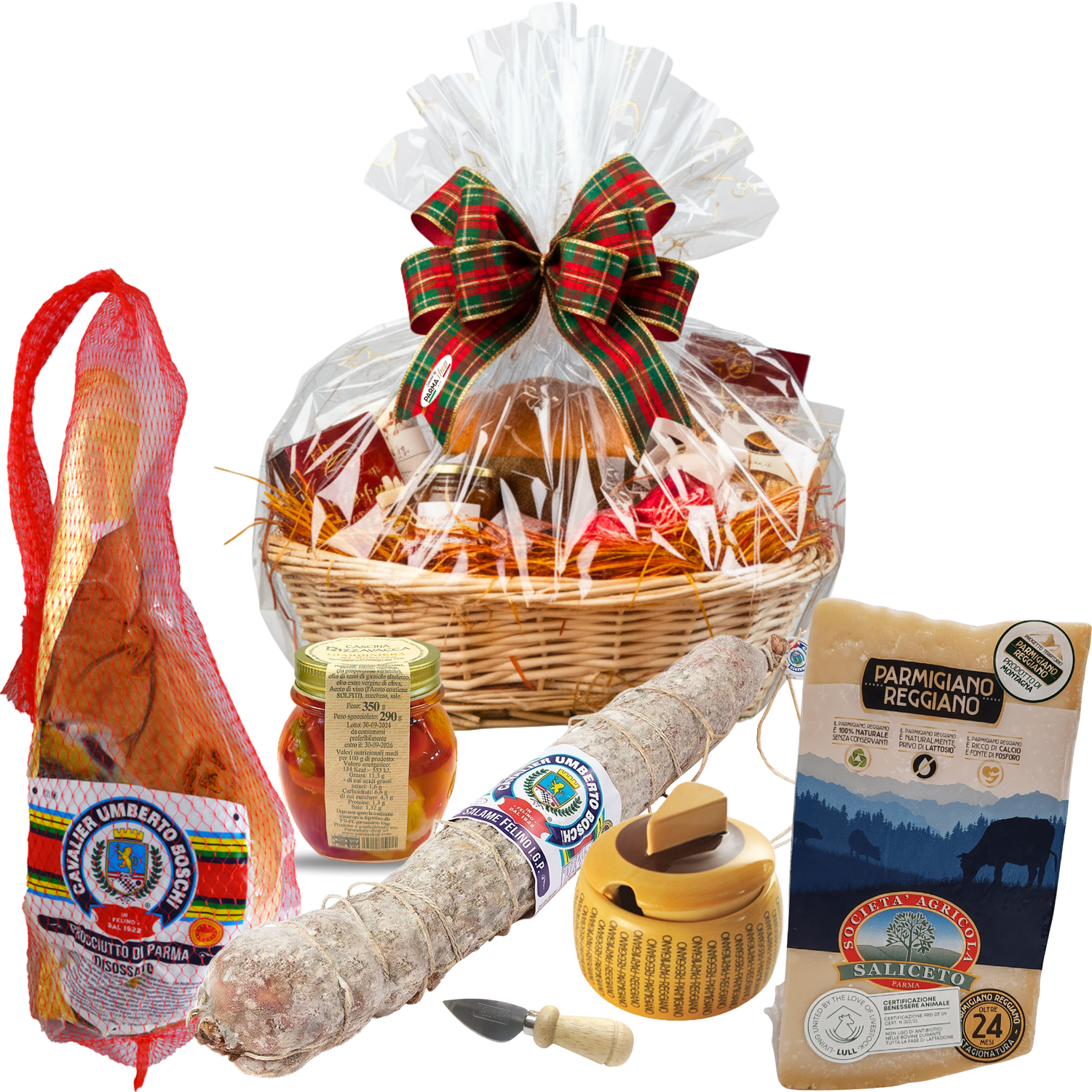
Each gourmet basket is a tribute to the richness of Italy's food and wine heritage, with a careful selection of the finest products from Parma and other areas that symbolize Italian taste. The packages are prepared by hand with attention to detail, from the choice of products to the care taken in the decorations and packaging, so that the pleasure begins with the eyes.
Traditional Balsamic Vinegar, Parmigiano Reggiano DOP, artisan cured meats, bronze-cut pasta and fine condiments are just some of the specialities that make our gift boxes unique. Each product is carefully selected to represent the best of regional culinary traditions.
For those who love intense flavors and refined contrasts, our gift sets offer a complete journey through the flavors of Italy. This is the case with the "Terra e Mare" box, which offers a dark balsamic condiment for meat and a fine white condiment for fish.
Of course, there are also packages dedicated to Parmigiano Reggiano DOP, the "king of cheeses," offered in different formats and paired with complementary products to enhance its flavor. Each package is designed not only to impress, but also to tell a story, that of the hands that produced each ingredient, the fields where the raw materials come from, and the small artisans who work according to ancient methods.
ParmaShop's gourmet gift packages are not tied to a particular season. They are available all year round, perfect for celebrating a special moment, for thanking someone in an authentic way, or for taking a taste of true Italian tradition with you, even when you are far from home. Each package embodies the value of a conscious choice, the emotion of a gift made with the heart, and the certainty of offering high-quality, typical Italian products that are a genuine expression of our food and wine heritage.
Sort by:
8 Products
8 Products
Offerta del Giorno

Caseificio Val d'Orcia
Pecorino Toscano DOP - Sheep's Cheese - Fresh - Half


Only 5 left. - Buy Now!
2763
27,63 €
32,50 €
Unit price
per




Selected by ParmaShop
"The King" - Specialities Basket
Only 2 left. - Buy Now!
43625
436,25 €
Unit price perHappy Customers, Authentic Flavors
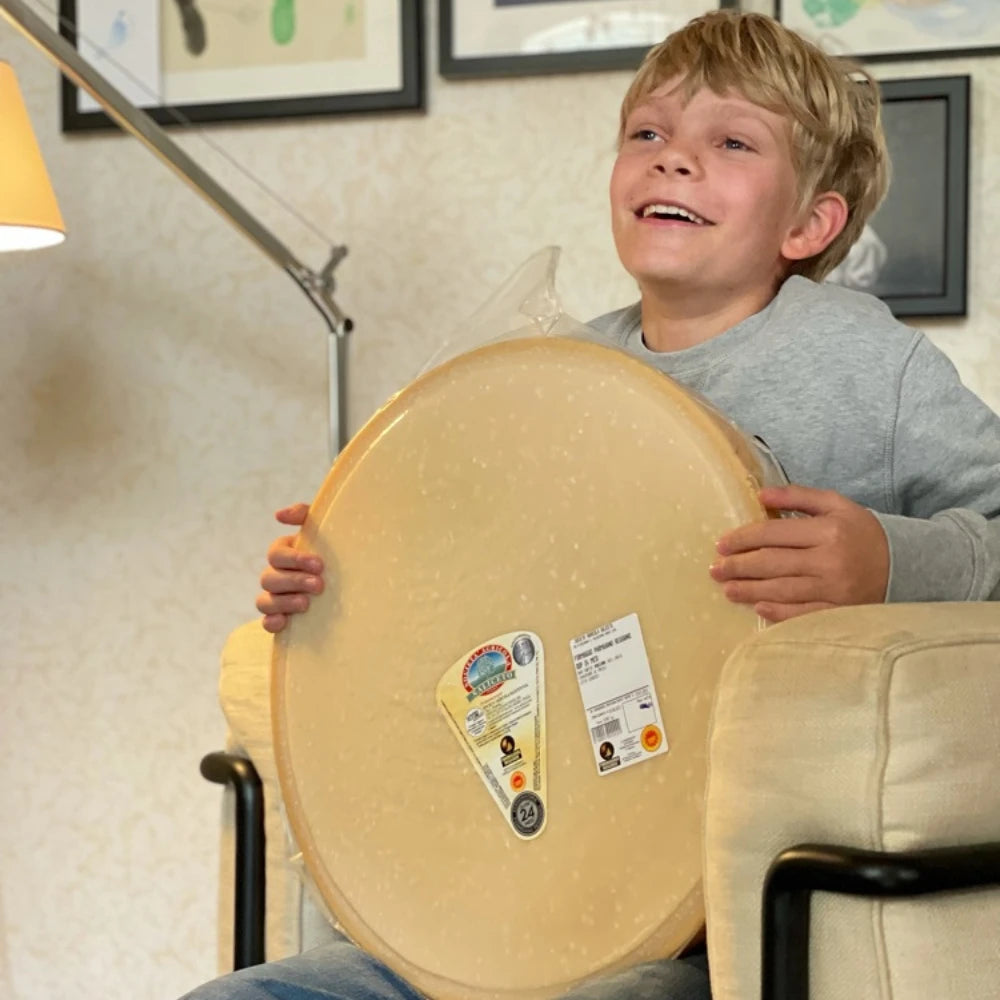
Daniel
Hovedgård, Denmark
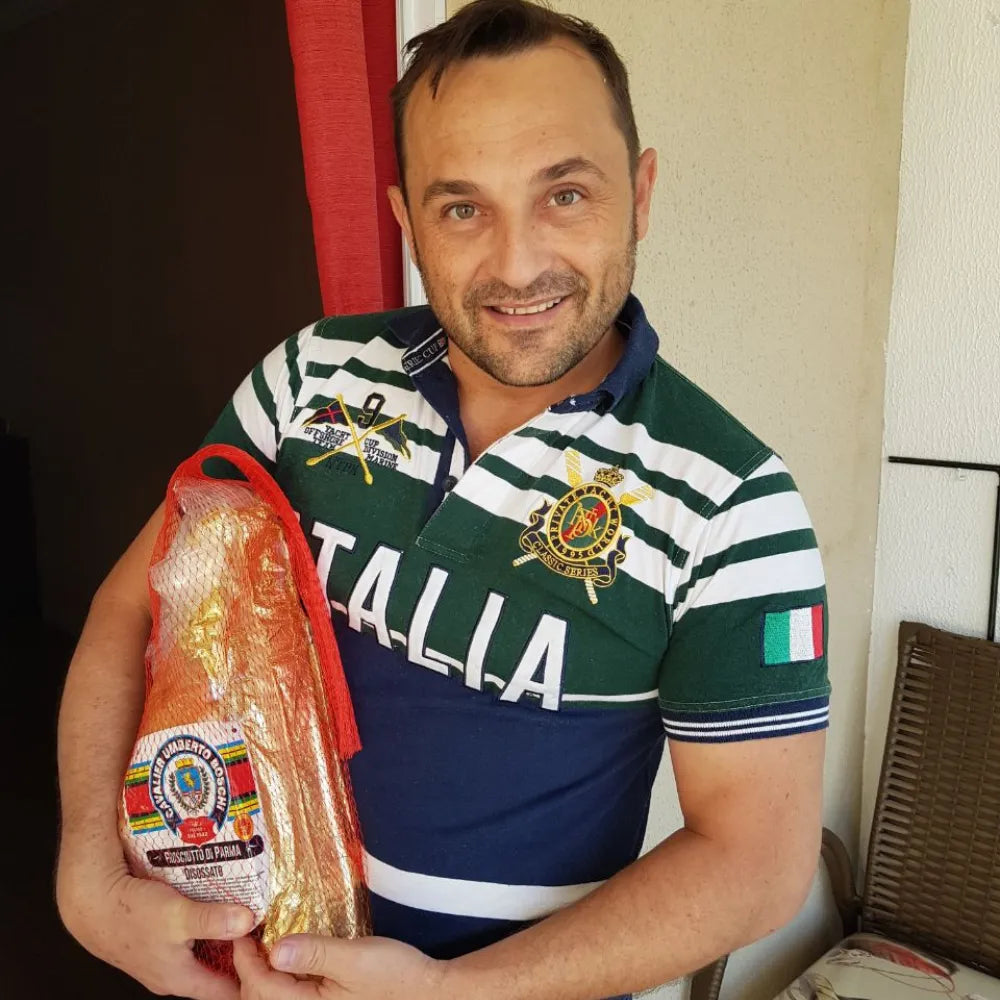
Vagner
São Paulo, Brazil
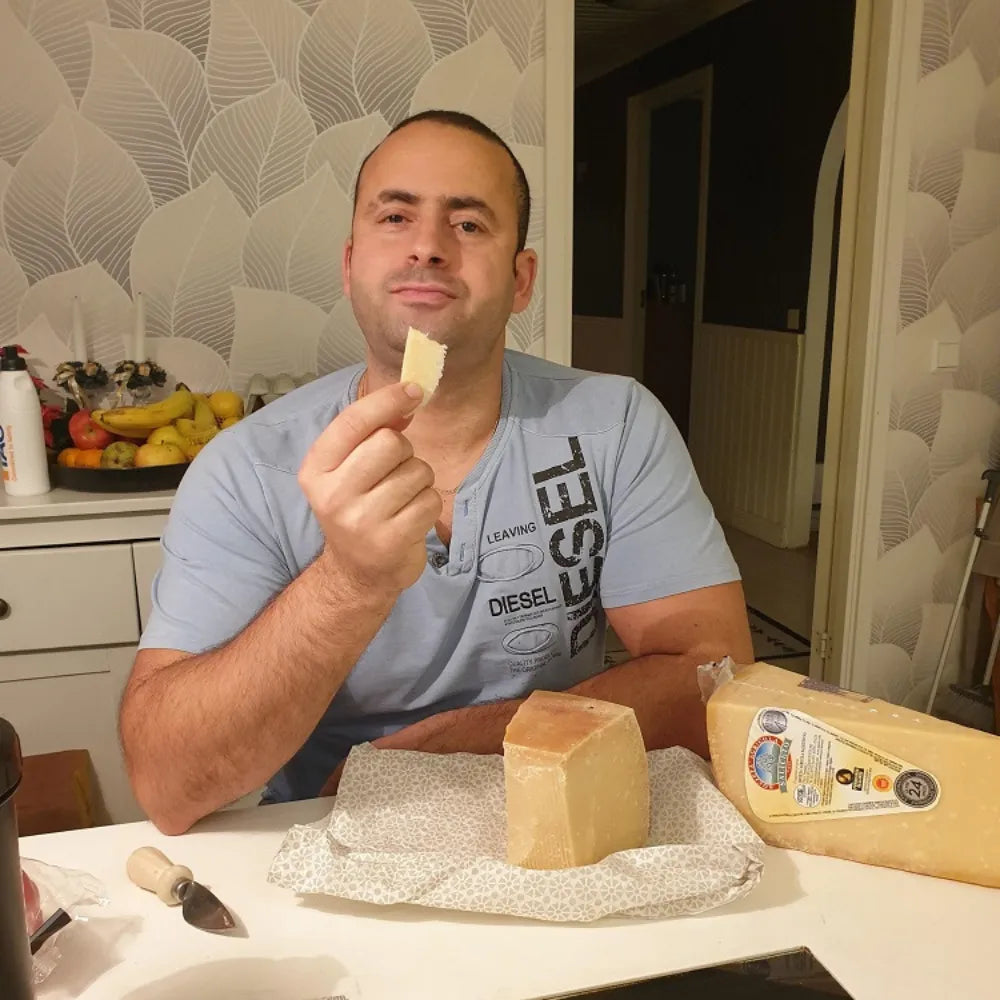
Ghaith Khalifa
Hällevadsholm, Sweden
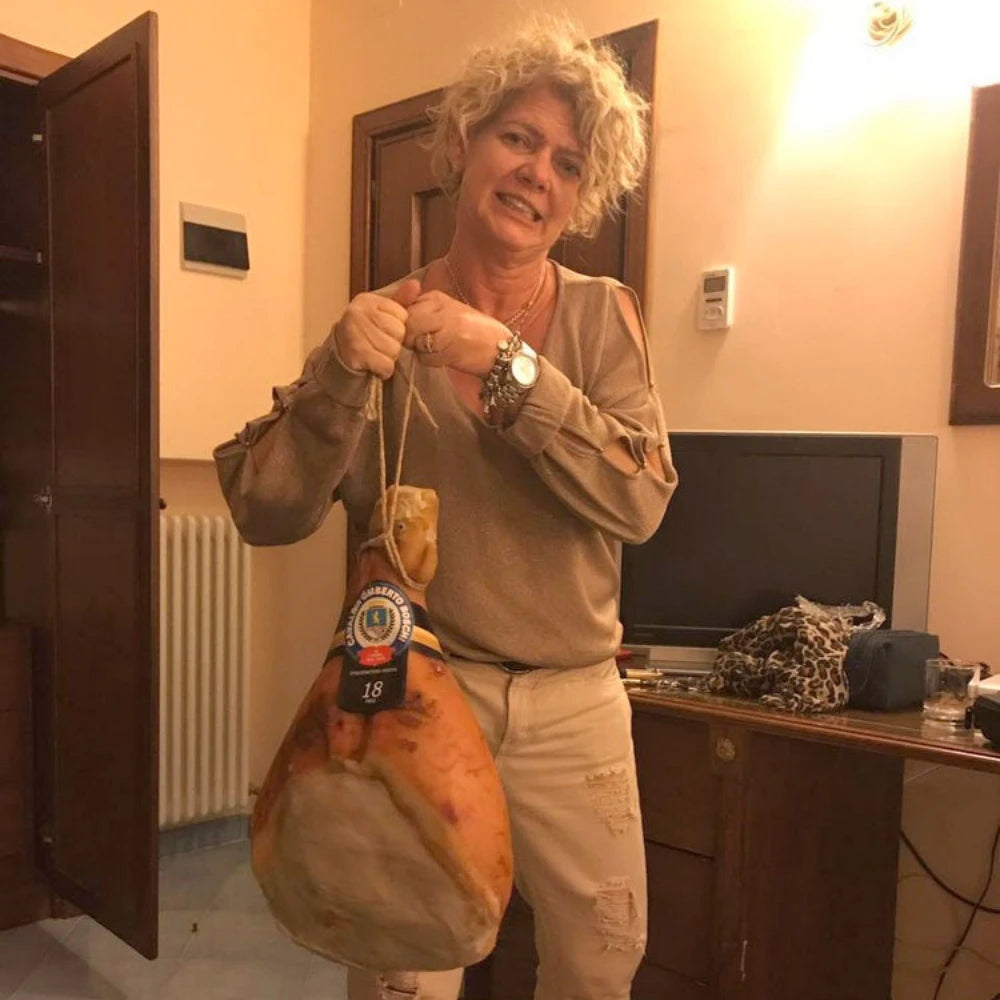
Eliane
Brasilia, Brazil
Hans Joachim
Wuppertal, Germany
James
Singapore, Singapore

Bo-Lennart
Alingsås, Sweden
Andy
Berlin, Germany
Inge
Rotselaar, Belgium
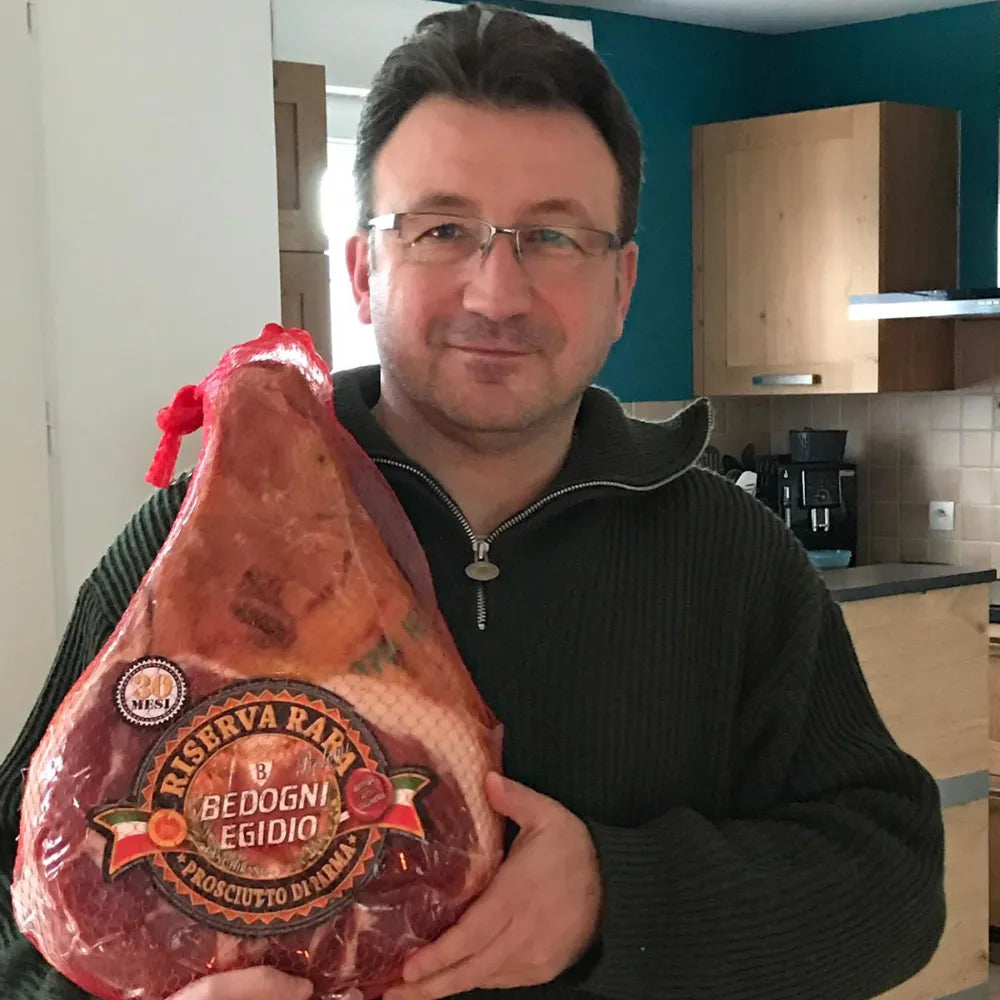
Lorenzo
Saint Quay Perros, France
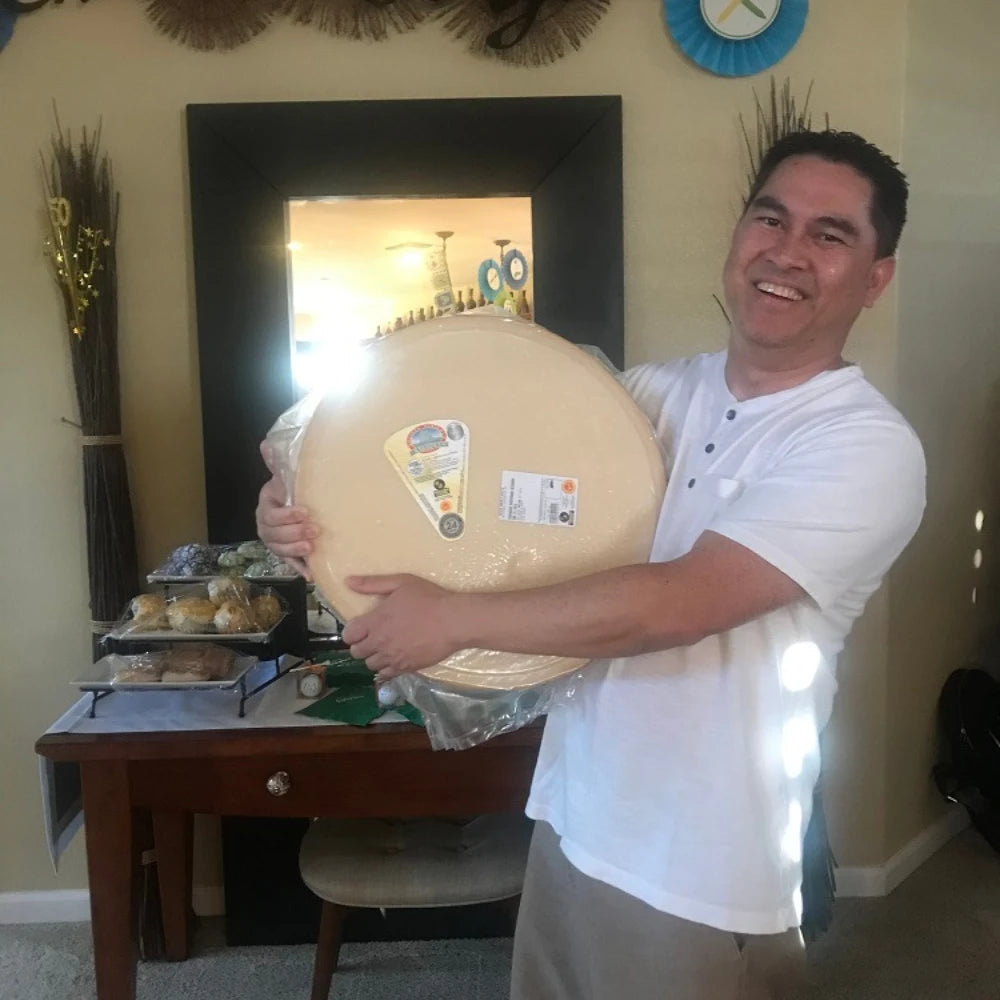
JoAnne
Stockton, United States

Otto
Passau, Germany
Dawson
Kilmany, United Kingdom
Find out more on our blog

on Jul 22 2026
There is a dish that, as soon as the heat arrives, reappears on Italian tables with the punctuality of cicadas: prosciutto and melon. Two ingredients, no cooking, a tradition passed down through generations. Yet behind this apparent simplicity lies a refined balance between the savory flavor of aged prosciutto and the juicy sweetness of the fruit—a contrast that chefs call “sweet and sour” and that this pairing exploits to perfection.
In short: prosciutto and melon is a summer appetizer (or light dish) that pairs thin slices of mild prosciutto with wedges of ripe melon. For an excellent result, you’ll need a perfectly ripe melon—Cantaloupe or honeydew—and a sweet-flavored prosciutto such as Prosciutto di Parma DOP, served at room temperature so the fat releases its full aroma.
It sounds easy, and in part it is. But choosing the right fruit, the right Cured Meats, and presenting them with care makes the difference between a forgettable dish and one your guests will remember. In this guide, we’ll explore its origins, ingredient selection, preparation techniques, and pairings—with facts and sources to guide you.
Why Prosciutto and Melon Go So Well Together
The secret lies in the contrast between sweet and savory. Melon provides simple sugars, water (over 90%), and a delicate aromatic note; prosciutto offers savory depth, fragrant fat, and a complexity that comes from long curing. When the two come together, the salt in the cured meats enhances the perception of the fruit’s sweetness, while the water and freshness of the melon lighten the savory richness of the meat. It’s the same principle that makes pairings like cheese and pears or figs and prosciutto so irresistible.
Added to this is the contrast in temperature and texture: the fresh, crisp melon against the soft, room-temperature prosciutto. It’s no coincidence that the Prosciutto di Parma Consortium specifically lists melon (and figs) as one of the classic pairings for its prosciutto, ideal for appetizers and light meals.
💡 Did you know that…
The name “cantaloupe” is said to derive from Cantalupo, a papal estate near Rome where, according to tradition—also reported by the Bologna Local Health Authority (AUSL)—monks first selected this variety. A fruit that was literally born in a monastery garden.
The Origins of Prosciutto and Melon: From Galen to Today’s Table
This pairing has its roots over two thousand years ago, in Galenic medicine. Galen, personal physician to Emperor Marcus Aurelius, argued that “cold and moist” foods—such as summer fruits—should be balanced with “hot and dry” foods, so as not to extinguish the body’s “internal fire.” Melon, cold and watery par excellence, thus found its ideal counterbalance in prosciutto, which is savory and aged.
There is documented evidence that the Romans ate prosciutto: Cato the Censor in De Agri Cultura and Marcus Terentius Varro in De Re Rustica already mention the people of Parma as being particularly skilled at producing salted ham. However, theirs was more of a salted meat than today’s sweet, raw prosciutto: it still lacked the element that over the centuries would become decisive for the curing process—namely, air.
After the Roman era, all traces of the dish were lost amid the grand Renaissance banquets. It reappeared almost unnoticed in 1891, when Pellegrino Artusi, in Science in the Kitchen and the Art of Eating Well, included “popone col prosciutto” on an August menu. It then disappeared again, only to reemerge in full force in the 1960s, becoming the summer appetizer we know today. Who “invented” it, then, is not a single person: it is the result of a long tradition rooted in medicine, peasant culture, and gastronomy.
Is the melon a fruit or a vegetable? Origin and varieties
This is a more nuanced question than it seems. From a botanical standpoint, the melon is the fruit of the Cucumis melo plant, belonging to the Cucurbitaceae family—the same family as squash, zucchini, and cucumber, which we instead use as vegetables. In the kitchen, however, due to its sweet taste and its role as a dessert, the melon is, to all intents and purposes, a fruit. Its place of origin is debated between Africa and Asia, but today it is widely cultivated around the world; in Italy, the main growing regions are Sicily and the Mantua area.
Not all melons are the same, and the choice of variety affects the final dish. Here are the main ones:
Varieties
Appearance
Flesh and Flavor
Ideal for…
Cantaloupe
Smooth or slightly ribbed skin, small
Orange, very aromatic and sweet
The classic prosciutto and melon
Netted (reticulated)
Ribbed skin with a raised net pattern
Orange, fragrant, firm
Pairing and serving in wedges
Smooth / winter variety
Smooth yellow or white peel
White-greenish, sweet and delicate
For those who prefer a more subtle contrast
The white (winter) melon is the right choice if you’re looking for a more subtle sweetness and a lighter fruit: about 22 kcal per 100 gr., compared to about 34 kcal for cantaloupe. Cantaloupe, however, remains the most traditional pairing for prosciutto, because its intense aromatic note holds its own against the savory flavor of the prosciutto.
How to Choose a Melon That’s Just Right
An unripe melon ruins even the best prosciutto. Ripeness is everything, and recognizing it takes just a few seconds. Here are the five most reliable signs:
Aroma: Bring your nose close to the base opposite the stem. A ripe melon has an intense, sweet aroma; if it has no smell, it’s unripe.
Stem: Where the stem attaches, the rind should give slightly under the pressure of your thumb.
Weight: For melons of the same size, choose the one that weighs the most—it’s richer in water and flesh.
Net pattern: In netted melons, a dense, raised net pattern indicates good ripeness.
Sound: A light tap with your knuckles should produce a dull, full sound, not a hollow one.
A tip: Buy it a couple of days in advance and keep it at room temperature to let it ripen, then transfer it to the refrigerator a few hours before serving. Cool but not ice-cold: Excessive cold numbs the aromas.
Which prosciutto to choose: Prosciutto di Parma DOP or San Daniele DOP?
This dish calls for raw, not cooked, prosciutto: only aged raw prosciutto offers that complex savory flavor that complements the melon. Among the great Italian raw prosciuttos, the two benchmarks are Prosciutto di Parma DOP and Prosciutto di San Daniele DOP. Parma is famous for its sweet and delicate profile, which makes it a natural pairing with the fruit’s sweetness.
What makes Prosciutto di Parma DOP so special? Its production regulations, among the strictest in the world:
Only two ingredients: pork from pigs born and raised in Italy, and sea salt. No preservatives, additives, or smoking are permitted.
Minimum aging period of 14 months: the new production regulations extended this from 12 to 14 months, while simultaneously reducing the maximum salt content from 6.2% to 6%.
A clearly defined area of origin: only the province of Parma, south of the Via Emilia, up to an altitude of 900 meters, between the Enza and Stirone rivers, where the wind from the hills ensures natural curing.
DOP certification since 1996 and the branded ducal crown: the mark that certifies the origin and traceability of each leg.
You can explore the available aging profiles in our Selection of Prosciutto di Parma DOP, cut to best complement melon. Here’s a quick comparison of these two great cured hams:
Characteristics
Prosciutto di Parma DOP
San Daniele Ham DOP
Flavor Profile
Sweet and delicate
More intense, slightly more savory
Ingredients
Italian pork + sea salt
Italian pork + sea salt
Minimum aging period
14 months
13 months
With melon
Balanced sweet-sweet flavor, very harmonious
More pronounced contrast
Golden rule: whichever raw ingredient you choose, have it sliced very thinly and serve it at room temperature. The fat needs time to warm up slightly to release its aroma.
How to Prepare and Plate Prosciutto and Melon
Anyone can make this dish. Here’s the classic method, step by step:
Cut the melon in half lengthwise and remove all the seeds.
Cut each half into 6–8 even wedges.
Separate the flesh from the rind with a knife, running it along the curve of the fruit.
Wrap each wedge with a slice of prosciutto, or arrange the melon and cured meats side by side on the plate.
Serve immediately, with the prosciutto at room temperature.
When plating, presentation is key. You can arrange the wedges in a radial pattern on a large plate, alternate the flesh and prosciutto in a honeycomb pattern, or create small rolls secured with a toothpick—perfect for a buffet. Just one rule: the prosciutto should be laid lightly, in a “wavy” pattern, never pressed flat.
Gourmet Ideas to Revamp the Classic
If you want to impress, this dish lends itself to contemporary interpretations—the same ones that have brought prosciutto and melon into fine dining kitchens and TV shows. Here are a few ideas:
Melon and burrata: add a dollop of creamy burrata for an even richer contrast.
Balsamic vinegar reduction: a few drops enhance the sweet-and-sour interplay.
Mint or basil: a few leaves add aromatic freshness.
Grilled melon: A quick sear in a pan caramelizes the sugars and adds a smoky note.
Skewers: perfect for cocktail hours and parties, they alternate melon cubes and prosciutto slices.
Wine and Pairings: What to Serve with Prosciutto and Melon
A good glass of wine rounds out the dish. The melon’s freshness and the prosciutto’s savory flavor pair well with sparkling wines and fragrant whites: a Lambrusco or a Malvasia dei Colli di Parma complement the prosciutto’s regional character, while a Prosecco or a Franciacorta cleanses the palate between bites. Lightly aged Prosciutto di Parma pairs well with young reds or sparkling whites; the more aged variety holds its own with more intense wines like Lambrusco.
And if you’re looking for alternatives to the classic sweet-and-salty pairing? The timeless classic is prosciutto and figs, just as traditional in late summer. For a variation on the Cured Meats, try bresaola or speck, which offer smokier or spicier notes. Melon, for its part, also pairs well with bread, breadsticks, and fresh cheeses. Whether enjoyed on its own or paired with other foods, it remains an ideal snack for afternoon tea or an aperitif.
Does prosciutto and melon make you gain weight? Calories and nutritional values
Good news: it’s one of the lightest appetizers around. Melon is more than 90% water and provides about 34 kcal per 100 gr. (cantaloupe), with about 7–8 gr. of sugars and a good amount of potassium, vitamin A, and vitamin C. Prosciutto di Parma DOP is virtually free of carbohydrates and sugars, rich in high-quality protein (about 25–28 gr. per 100 g) and branched-chain amino acids—valine, leucine, and isoleucine—which make up over 20% of its protein content.
Food (100 gr.)
Calories
Sugars
Protein
Cantaloupe
~34 kcal
~7–8 gr.
~0.8 gr.
Prosciutto di Parma DOP
~260 kcal.
<0.5 gr.
~26 gr.
This value decreases when visible fat is removed. Approximate data, source: CREA — Food Composition Tables.
A typical serving (about 150 gr. of melon and 60 gr. of prosciutto) is around 200 kcal, providing an excellent source of protein. Be mindful of salt, however: prosciutto naturally contains salt, so those who need to limit their sodium intake should consume it in moderation. As for cholesterol, melon contains none at all—since it’s a fruit—while prosciutto, when consumed in reasonable portions, fits easily into a balanced diet.
It should be noted that, although light, prosciutto and melon is not a true complete meal: nutrition specialists at Humanitas point out that, on its own, it is unlikely to replace a balanced meal, as it is unbalanced in terms of protein and simple sugars. It’s excellent as an appetizer or light meal, preferably accompanied by other foods. A useful fact for dieters: for the same weight, melon contains more sugar and about twice as many calories as watermelon (about 15 kcal per 100 gr.), which remains the “waterier” of the two fruits.
Want to start with the right ingredients? The secret to a memorable prosciutto and melon dish is a sweet, dry-cured prosciutto that’s aged to perfection and thinly sliced. Discover our Selection of Prosciutto di Parma DOP, featuring the ducal crown that certifies its origin and quality.
Shop Now
In Conclusion
Behind the simplicity of these two ingredients lies a history spanning two thousand years, a carefully crafted balance of flavors, and a choice of ingredients that makes all the difference. A ripe melon, a sweet, thinly sliced Prosciutto di Parma DOP, served at room temperature: these few simple touches are all it takes to transform an everyday appetizer into a small masterpiece of the Italian summer. Choose the right prosciutto and let the quality speak for itself: you’ll find it in our Selection of Prosciutto di Parma DOP.

on Jul 09 2026
Every year, between November and January, two different rankings attempt to answer the same question—what is the best cheese in the world —and they almost never agree. At the 2025 World Cheese Awards in Bern, an 18-month-aged Swiss Gruyère took the top spot. For the TasteAtlas community, however, the 2026 podium is Greek-Italian, with Parmigiano Reggiano DOP firmly in second place overall out of more than 100 cheeses surveyed. There is therefore no single objective answer: it depends on who is judging, by what criteria, and at what time of year.
What the data does confirm unequivocally, however, is another record: Parmigiano Reggiano is the most decorated cheese in the history of the World Cheese Awards, with a total of 937 awards won by the Parmigiano Reggiano National Team from 2001 to the present, including 3 Super Gold awards won in the 2025 edition. No other cheese in the world can boast such a cumulative record over time.
In this article, we compare the most authoritative rankings —the World Cheese Awards, TasteAtlas, and the official data from the Protection Consortium—to truly understand what “the best” means when it comes to cheese, and why Parmigiano Reggiano DOP remains, regardless of the current podium, the global benchmark for those seeking quality, traceability, and Italian cheese-making tradition.
How is the world’s best cheese determined?
There is no single body that certifies “the best cheese in the world”: there are competitions and rankings with very different methodologies, which explains why the results vary from one source to another.
The World Cheese Awards, organized by the British Guild of Fine Food, are the world’s largest cheese competition by number of participants: in 2025, they evaluated 5,244 cheeses from 46 countries, judged blind by 265 international experts. Each cheese is evaluated on appearance, aroma, texture, flavor, and mouthfeel; the best receive a bronze, "Argento" medal, gold, or Super Gold medal, and from among the gold medalists, a Super Jury selects the 14 finalists from which the overall champion is chosen.
TasteAtlas follows a different approach: it is not a technical competition but a review platform, whose “Top 100 Cheeses in the World” ranking is based on the ratings of millions of users, enthusiasts, and travelers worldwide. It is therefore more akin to a measure of widespread popularity and consumer preference than to a professional sensory evaluation.
There is also a third criterion, less frequently discussed but equally important for consumers: consistency over time. A cheese may win a single award in a given year, but only a very small number of products consistently rank, year after year, among the world’s most awarded. This is where Parmigiano Reggiano DOP stands out.
💡 Did you know that…
It takes about 550 liters of milk to produce a single wheel of Parmigiano Reggiano DOP, and each wheel must weigh between 30 and over 40 Kg. This means that behind every aged wheel lies the daily work of dozens of dairy cows and an entire dairy for more than 12 consecutive months—even before the Consortium’s expert tasters begin their evaluation.
World Cheese Awards 2025: The Official Verdict
The 37th edition of the World Cheese Awards 2025 took place in Bern, Switzerland, from November 13 to 15, 2025, with record participation: 5,244 cheeses from 46 countries, a 9.13% increase over the previous edition. The title of overall champion went to the Gruyère AOP “Vorderfultigen Spezial, ” aged for over 18 months and produced by the Bergkäserei Vorderfultigen mountain dairy, made with milk collected within a radius of just 1 km from the dairy.
On the Italian front, the results remain extraordinary: Italy finished the 2025 edition in third place among the nations with the most medals, with a total of 376 awards (behind Spain, with 600, and Switzerland, with 597), including 11 Super Gold medals. The Parmigiano Reggiano national team alone won 103 medals—3 Super Gold, 27 gold, 34 silver, and 40 bronze—an all-time record for a single cheese in this competition, bringing Parmigiano Reggiano’s all-time tally to 937 medals from 2001 to the present.
The dairies awarded Super Gold medals were from the provinces of Modena (Caseificio 4 Madonne dell’Emilia, aged 40 months), Reggio Emilia (Latteria Sociale San Bartolomeo, 30-39 months, and Latteria Sociale San Girolamo, 24-29 months)—confirming that the quality of Parmigiano Reggiano depends not only on the designation but also on the artisanal craftsmanship of every single dairy in the production area.
TasteAtlas: The Ranking Favored by Enthusiasts
While the World Cheese Awards represent the technical judgment of experts, TasteAtlas captures global popular taste. In the “Top 100 Cheeses in the World” list updated in January 2026, first place went to Graviera Naxou, a Greek hard cheese made from cow’s milk on the island of Naxos, which surpassed its long-standing competitors from France and Italy. Parmigiano Reggiano ranked second overall.
Here is the complete top 20 list of the world’s best cheeses according to TasteAtlas’s “Best Cheese Types in the World 2025” ranking, updated in January 2026:
Rank
Cheese
Origin
1st
Graviera Naxou
Naxos, Greece
2nd
Parmigiano Reggiano DOP
Parma, Italy
3rd
Queijo de Azeitão
Palmela, Portugal
4th
Mozzarella di Bufala Campana DOP
Campania, Italy
5th
Graviera Kritis
Crete, Greece
6th
Serra da Estrela Cheese
Serra da Estrela, Portugal
7th
Sardinian Pecorino
Sardinia, Italy
8th
Kefalograviera
Epirus, Greece
9th
Burrata
Puglia, Italy
10th
Saint-Félicien
Rhône-Alpes, France
11th
Metsovone
Metsovo, Greece
12th
Pecorino Toscano
Tuscany, Italy
13th
Saint-André
Coutances, France
14th
Sicilian Pecorino
Sicily, Italy
15°
Redykołka
Podhale, Poland
16th
Livanjski sir
Livno, Bosnia and Herzegovina
17th
Brillat-Savarin
Forges-les-Eaux, France
18th
Canastra
Minas Gerais, Brazil
19th
Gołka
Silesia, Poland
20th
Mont d'Or
Doubs, France
Out of 20 spots, Italy has placed no fewer than 6 Italian cheeses (Parmigiano Reggiano, Mozzarella di Bufala Campana, Pecorino Sardo, Burrata, Pecorino Toscano, and Pecorino Siciliano), more than any other country alongside Greece, confirming the depth—not just the top-tier excellence—of the Italian cheese-making tradition.
It is worth noting that the top three often change from one year to the next: in the “100 Best Cheeses in the World 2023-2024” edition of the same platform, Parmigiano Reggiano held the top spot, ahead of Mozzarella di Bufala Campana and Stracchino di Crescenza, making for an all-Italian podium. This fluctuation demonstrates that “community-based” rankings reflect trends and waves of reviews rather than actual variations in product quality, which, in the case of Parmigiano Reggiano, is guaranteed by production regulations that have remained essentially unchanged for centuries.
Why Parmigiano Reggiano DOP Remains the Global Benchmark
Unlike many “one-time” winners of annual rankings, Parmigiano Reggiano DOP is the only cheese that consistently appears, year after year, in both technical competitions and popular preference rankings. The reasons can be traced to three objective factors, all governed by the Production Specifications filed with the Protection Consortium.
A Strict and Essentially Unchanged Production Specification
Parmigiano Reggiano DOP may be produced only in the provinces of Parma, Reggio Emilia, Modena, Bologna (to the left of the Reno River), and Mantua (to the right of the Po River), exclusively from partially skimmed raw cow’s milk, salt, and rennet, without any additives or preservatives. The minimum aging period is 12 months, but it can continue for up to 24, 36, 48 months, and beyond, developing increasingly complex flavor profiles.
Full traceability, wheel by wheel
Each wheel of Parmigiano Reggiano is produced with a casein tag bearing a unique alphanumeric code, applied at the time of production. After the minimum 12 months, each individual wheel undergoes expert evaluation: the Consortium’s expert “tappers” “listen” to it by tapping it with a small hammer to detect any internal defects before applying the final branded mark. Only wheels that pass this inspection are entitled to bear the name Parmigiano Reggiano.
Naturally Lactose-Free
Within the first 48 hours of production, lactic acid bacteria completely convert the lactose in the milk into lactic acid: this is why Parmigiano Reggiano is naturally lactose-free, regardless of its aging period—a characteristic confirmed by the Ministry of Health (2016 authorization)—making it suitable even for those with lactose intolerance. A 50-gram serving also provides about 72% of the daily calcium requirement, thanks to a calcium-to-phosphorus ratio that is particularly conducive to absorption.
Would you like to taste the cheese that, since 2001, has won more medals than any other in the world?
Discover our selection of Parmigiano Reggiano DOP, from classic aged varieties to "Extra Vecchio" reserves, shipped directly from Parma.
Buy Now
Parmigiano Reggiano vs. Gruyère vs. Comté: What Really Sets Them Apart
One of the most frequently asked questions from those comparing the great European hard cheeses is this: how do Parmigiano Reggiano, Swiss Gruyère, and French Comté—often mentioned together in international rankings—differ?
Milk: Parmigiano Reggiano uses raw, partially skimmed cow’s milk through natural cream separation; Gruyère and Comté use whole cow’s milk, which is often heated.
Minimum aging: 12 months for Parmigiano Reggiano, compared to 5 months for Gruyère AOP and 4 months for Comté AOP (although award-winning versions far exceed these minimums).
Texture: Parmigiano Reggiano has a fine, crumbly texture due to its long aging and the formation of tyrosine crystals; Gruyère and Comté have a more elastic texture and visible holes.
Flavor: Parmigiano Reggiano develops notes of umami, dried fruit, and meat broth as it ages; Gruyère tends toward sweeter, nutty, and slightly fruity notes; Comté varies greatly from season to season depending on the cows’ diet.
There is no absolute “best” among the three: the choice depends on the intended use (grating, serving, cooking) and the flavor profile you’re seeking. For those who prefer intensity, a grainy texture, and a direct connection to the Italian terroir, Parmigiano Reggiano DOP remains the benchmark.
What is the most award-winning Italian cheese in the world?
In addition to Parmigiano Reggiano, Italy also brings other outstanding cheeses to the international stage. At the 2024 World Cheese Awards, for example, the title of best Italian cheese in the world’s top ten went to Pecorino Bislacco al Rum e Tabacco by Fratelli Petrucci (tied for fourth place), followed by Blugins from Casearia Carpenedo (a gin-infused blue cheese) and Tatie from Latteria Moro. In the same edition, Asiago DOP also reaffirmed its status as an international star, winning seven medals, including three golds for the Stravecchio variety.
Among blue cheeses, it’s worth noting that Gorgonzola DOP regularly wins at international competitions thanks to a rare balance between the creaminess of the cheese and the intensity of its noble blue veins, achieved through controlled aging times and a rigorous Selection of wheels—characteristics that make it one of the most exported blue cheeses in the world.
What is the most expensive cheese in the world?
It is important to distinguish between “best” and “ most expensive”: they do not always coincide. Among the world’s most expensive cheeses are extremely rare varieties such as Serbian Pule (made from donkey’s milk and produced in very small quantities), alongside Parmigiano Reggiano aged for over 60-80 months, sold as collector’s items due to the aromatic complexity they achieve. In these cases, the price reflects scarcity and the length of the aging process rather than a higher quality rating compared to standard-aged varieties.
Quick Comparison: World Cheese Awards vs. TasteAtlas
Criterion
World Cheese Awards
TasteAtlas
Judges
265 international experts, blind tasting
Global community of users and enthusiasts
Number of cheeses evaluated
5,244 (2025 edition)
Over 100 in the rankings
Method
Technical score based on appearance, aroma, texture, and flavor
Average user reviews
Winner 2025/2026
Gruyère AOP "Vorderfultigen Spezial" (Switzerland)
Graviera Naxou (Greece)
Best Italian
Parmigiano Reggiano, the most decorated cheese in the history of the competition
Parmigiano Reggiano, 2nd place overall
Conclusion
Asking which is the best cheese in the world really means choosing which lens to use to judge it: the technical one of the World Cheese Awards, where a Swiss Gruyère triumphed in 2025, or the popular one of TasteAtlas, where Parmigiano Reggiano remains firmly on the podium. What no annual ranking can diminish is consistency: 937 medals over 24 years of participation in the World Cheese Awards make Parmigiano Reggiano DOP the most awarded cheese in history—an achievement that no single seasonal title can match.
If you’d like to bring this record-breaking cheese to your table, discover our Selection of Parmigiano Reggiano DOP, sourced directly from dairies in the Parma region.

on Mar 17 2026
If you’re looking for information on Parmigiano Reggiano and cholesterol, someone has probably told you to be careful. Yet science tells a different—and much more delicious—story than you might expect. 100 gr. of Parmigiano Reggiano DOP contain about 83–88 mg of cholesterol, a figure that pales in comparison to the 1,232 mg per 100 gr. found in egg yolk. The comparison speaks for itself.
The short answer to the most frequently asked question is this: Parmigiano Reggiano is not only safe for those watching their cholesterol, but it is one of the “lightest” aged cheeses in this regard. Of course, as with any nutritious food, portion size and frequency make all the difference.
How much cholesterol does Parmigiano Reggiano contain?
The most direct question deserves an equally direct answer. According to the nutritional database of CREA (Center for Food and Nutrition Research), 100 gr. of Parmigiano Reggiano DOP contain approximately 83–88 mg of cholesterol. For a standard 30-gr. serving—the amount recommended by nutrition experts—this amounts to just 25–26 mg of cholesterol, compared to 10 gr. of high-biological-value protein and 360 mg of bioavailable calcium.
To put this into immediate context: the World Health Organization recommends not exceeding 300 mg of dietary cholesterol per day. A 30-gr. serving of Parmigiano therefore accounts for less than 10% of this threshold. This fact puts many concerns into perspective.
Nutritional Values of Parmigiano Reggiano per 100 gr.
Nutrient
Amount per 100 gr.
Amount per 30 gr. (serving)
Cholesterol
83–88 mg
approx. 26 mg
Total fat
approx. 28 gr.
about 8.4 gr.
of which saturated
about 18 gr.
approx. 5.4 gr.
Protein
about 33 gr.
about 10 gr.
Calcium
about 1,155 mg
approx. 346 mg
Energy (kcal)
about 392 kcal
approx. 118 kcal.
Source: based on data from CREA and the Parmigiano Reggiano Consortium
Parmigiano Reggiano vs. Other Cheeses: The Cholesterol Chart.
People trying to lower their cholesterol often cut out aged cheeses in favor of fresh ones. But the actual comparison is surprising: Parmigiano Reggiano has cholesterol levels similar to or even lower than many common fresh cheeses, when compared by weight.
Cheese
Cholesterol (mg/100 gr.)
Saturated Fat (gr./100 gr.)
Parmigiano Reggiano DOP
83–88 mg
approx. 18 gr.
Grana Padano DOP
approx. 109 mg
approx. 17 gr.
Pecorino Romano
about 104 mg
about 17 gr.
Gorgonzola
about 70 mg
about 19 gr.
Stracchino
about 90 mg
about 15 gr.
Cow's milk mozzarella
about 46 mg
about 9 gr.
Whole egg
about 371 mg
about 3 gr.
Egg yolk
about 1,232 mg
approx. 9 gr.
Grana Padano Institute - Nutrition Education
The most striking fact is the comparison with Grana Padano: the latter, often perceived as a “lighter alternative,” actually contains about 20–25 mg more cholesterol per 100 gr. Parmigiano Reggiano DOP is therefore the aged hard cheese with the most favorable lipid profile.
Parmigiano Reggiano or Grana Padano: Which Is Less Harmful to Cholesterol?
This is one of the most frequently asked questions, and it finally has a clear answer. With about 88 mg of cholesterol per 100 gr., Parmigiano Reggiano DOP is better than Grana Padano (about 109 mg/100 gr.) in terms of both cholesterol and protein content: Parmigiano Reggiano, in fact, offers about 33 gr. of protein per 100 gr. compared to about 32 gr. in Grana Padano, with a higher nutritional density despite a lower cholesterol content.
The difference is partly explained by the production regulations: Parmigiano Reggiano is made with partially skimmed milk (through the natural separation of cream), while Grana Padano follows a slightly different process. Both are protected DOP products, but for those monitoring their lipid profile, Parmigiano Reggiano is the better choice.
Parmigiano Reggiano and Cholesterol: Does Aging Matter?
One of the most technical—and most interesting—questions concerns whether and how aging affects the cholesterol content in Parmigiano Reggiano. A study by the University of Bologna (AMS Thesis, CRPA Lab) analyzed samples of 24- and 36-month-old Parmigiano Reggiano DOP from three different dairies, evaluating variations in the lipid fraction.
The study showed that as aging progresses, free water decreases and nutrients become more concentrated—including cholesterol. In absolute terms, a 36-month Parmigiano will tend to have slightly higher values than a 24-month one, but the difference is small and offset by significantly greater digestibility. The process of proteolysis (protein breakdown) that occurs during the long aging process makes the product more easily digestible and less taxing on the metabolism.
Comparison of Aging Periods: Parmigiano Reggiano and Lipid Profile
Aging
Approximate Cholesterol (mg/100 gr.)
Digestibility
Notes
24 Months
approx. 83–86 mg
High
Balanced, daily use
30 months
Approx. 85–88 mg
Very high
Excellent for grating
36 months
approx. 88–92 mg
Excellent
High aromatic and nutritional concentration
Over 40 months
approx. 90–95 mg
Excellent
For tasting, small portions
Note: Aging values beyond 24 months are indicative estimates based on the concentration effect due to moisture loss, derived from CREA data and the cited CRPA Lab / Unibo research.
Does Parmigiano Reggiano raise cholesterol? The Fundamental Distinction.
One of the most common confusions in nutrition is that between dietary cholesterol (the kind found in food) and blood cholesterol (the kind in the blood, measured in tests). Several studies—including a 2020 review in the Journal of the American College of Cardiology —suggest that dietary cholesterol has a more limited impact on blood levels than previously believed, especially compared to saturated and trans fats.
Saturated fats are the main factor stimulating the endogenous production of LDL cholesterol in the liver. Parmigiano Reggiano contains about 18 gr. of saturated fat per 100 gr.—a significant amount, but in a 30-g serving, this corresponds to about 5.4 gr., well within the limits of a balanced Mediterranean diet. The Parmigiano Reggiano Consortium recommends 2–3 servings per week, each weighing 30–40 gr.
Parmigiano Reggiano does not significantly raise blood cholesterol when consumed in the recommended portions (30 gr.).
Its high calcium content (1,155 mg/100 gr.) may promote the intestinal excretion of saturated fats, thereby reducing their absorption.
Bioactive peptides released during aging (such as those derived from casein) have shown antihypertensive properties in some preliminary studies.
Its low lactose content (virtually absent after 24 months of aging) makes it suitable even for those with lactose intolerance.
Its very high protein density ( 33 gr. of protein per 100 gr.) makes it filling: you eat less, which indirectly promotes lipid control.
How much Parmigiano can you eat if you have high cholesterol?
The answer isn’t a ban, but moderation. In a diet for hypercholesterolemia, Parmigiano Reggiano can be included by following these guidelines:
Maximum serving size: 30–40 gr. per serving (equivalent to 2–3 generous shavings).
Frequency: 2 times a week, avoiding pairing it with other foods high in saturated fat in the same meal.
As grated: 5–10 gr. per dish (equivalent to about 1–2 level tablespoons) does not significantly affect the daily lipid profile.
Preferred aging: 24 or 30 months offers the best balance between digestibility, cholesterol content, and flavor intensity.
Recommended pairings: fruit, raw vegetables, legumes—fiber-rich foods that help reduce cholesterol absorption.
If you are taking statins or other lipid-lowering medications, there are no known interactions with Parmigiano Reggiano. However, for a personalized diet, it is always advisable to consult your doctor or nutritionist.
Saturated Fats vs. Cholesterol in Parmigiano: The distinction that changes everything.
Many people with high cholesterol worry about dietary cholesterol but overlook saturated fats—which, paradoxically, have a more direct impact on LDL levels in the blood. Parmigiano Reggiano has a complex fat profile: in addition to saturated fats, it contains a significant amount of monounsaturated fatty acids (such as oleic acid) and a small percentage of polyunsaturated fats, including conjugated linoleic acid (CLA), a fatty acid found in the milk of grass-fed cattle and associated in the literature with potential beneficial effects on lipid metabolism.
The complete lipid profile of Parmigiano Reggiano is therefore not that of a simple “fatty cheese”: it is a complex matrix, in which the presence of calcium, proteins, and micronutrients modulates the overall metabolic impact in a more favorable way than simply reading the “saturated fat” value on the label.
💡 Did you know that…
100 gr. of Parmigiano Reggiano DOP contain about 83–88 mg of cholesterol, while 100 gr. of egg yolk contain over 1,200 mg— almost 15 times more . Yet eggs are often considered more “diet-friendly.” Parmigiano also offers complete proteins of the highest biological value, bioavailable calcium, and such high digestibility that 100 gr. are absorbed in just 45 minutes, compared to the 3–4 hours required for the same amount of meat.
Parmigiano Reggiano in the Mediterranean Diet: A Rightful Place.
The Mediterranean Diet, recognized by UNESCO as Intangible Cultural Heritage of Humanity, does not exclude aged cheeses: it includes them as a concentrated source of protein and calcium, to be consumed in moderation. Parmigiano Reggiano DOP fits perfectly into this framework, thanks to its nutritional density, versatility in the kitchen, and low lactose content, which makes it accessible to most adults.
For the elderly—a group often disadvantaged by dietary restrictions related to cholesterol—Parmigiano Reggiano is particularly valuable: its high calcium content (1,155 mg/100 gr., nearly double the daily requirement in a 50-gr. serving) and protein content make it an ally against osteoporosis and sarcopenia, conditions far more common and debilitating than a slight increase in dietary cholesterol.
Have you discovered that Parmigiano Reggiano is compatible with a cholesterol-conscious diet?
Now all you have to do is choose the aging profile that’s right for you: from the classic 24-month to the prized 22-year-old, have it delivered directly to your home in just a few days, and enjoy it with friends and family with peace of mind.
Discover All Aging Periods
Conclusion: A Cheese Worth Re-Evaluating, with Awareness.
Parmigiano Reggiano and cholesterol are not enemies. With less cholesterol than an egg, exceptional digestibility, and a nutritional density unmatched by any other cheese in the world, Parmigiano Reggiano DOP deserves a permanent place in the diet of health-conscious individuals thanks to its nutrients and exceptional quality. The key, as always, is mindful consumption in accordance with guidelines.
Savoring a shavings of Parmigiano Reggiano DOP means rediscovering a centuries-old tradition. It is the result of the work of dairies that transform raw milk with the wisdom of yesteryear, tending to each wheel with meticulous care until it reaches perfect maturity. Milk, rennet, and years of patient waiting: the flavor will tell you what makes it different. And with just 30 grams a day, your health will thank you too.

Parma City of Gastronomy

Certified Quality

Top Customer Support

Accurate Shipping
ParmaShop.com

📍 Strada Traversante San Leonardo, 13/A - 43122 Parma (PR) - Italy
P.IVA / VAT: IT02445370345